

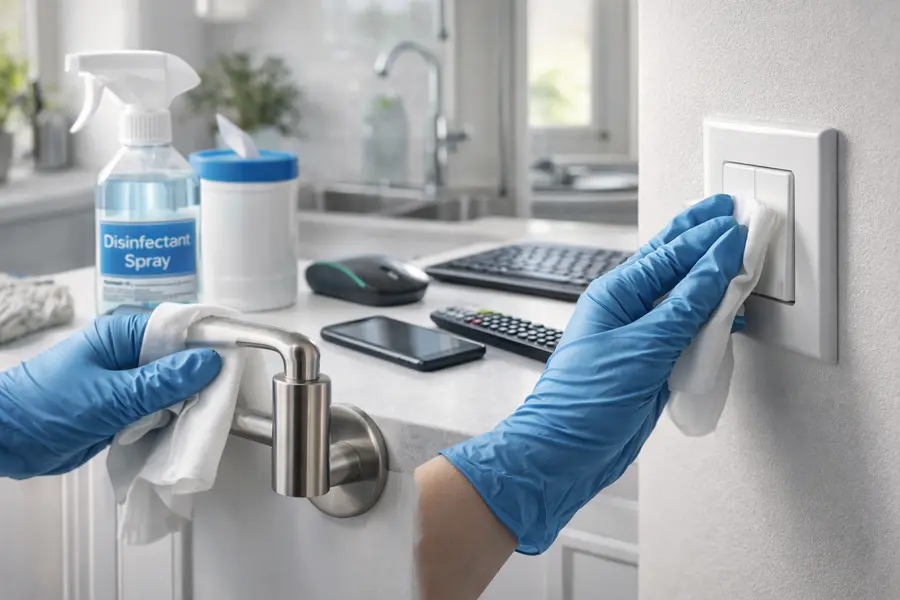
When did you last clean the light switch that you use on a daily basis? Or the handle of the door that all people pick up unconsciously? We are more likely to look at the dirty as we see it in a dirty shelf, untidy floor or dirty counter tops but what of the little places we bump into? Admittedly, germs, oils and dirt are being silently collected by high-contact places of your house all day long. They are frequently used and therefore easily become hotspots to bacteria and viruses.
The positive thing is that it does not take hours to make them clean. You can keep a healthier and fresher environment with you and your family, with the proper routine and frequency.
1. What Are High-Touch Points?
High-contact points refer to those surfaces and objects that are touched by many individuals, as per cleaning professionals. These are doorknobs, light switches, remote controls, cabinet handles, appliance buttons, mobile phones and faucet handles. Hands are easy to touch and because of them, dirt, oils, and germs can be spread without any difficulties that is why those areas can be contaminated much quicker than the rest of your house. Those might appear clean, yet they might have an invisible bacteria. Cleaning these areas on a regular basis is vital in ensuring the control of spread of sickness and hygiene. for extra help, bond cleaning can professionally sanitize these high-touch surfaces.
2. Cleaning Everyday: The Basics
There are certain high-touch regions that are best washed on a daily basis particularly where a large family lives. The kitchen surfaces, faucet knobs, the fridge door, the stove knobs and table are touched numerous times a day. This can be also applied to bathroom sinks, faucet handles as well as flush lever.
By far it is even more important to disinfect your house on a daily basis when somebody in your house is ailing. Germs can survive on hard surfaces in hours or even days depending on the nature of the bacteria or virus. Contamination can be very much minimized by giving a brief spray of a disinfectant or a dilution of a cleaning solution every evening. Everyday cleaning does not necessarily need to be difficult. A small piece of a cloth made of microfiber and a good disinfectant are typically sufficient to keep things clean.
3. Every Two to Three Days
It is possible that some of them do not need daily cleaning procedure but must be washed several times a week. The best examples would be light switches, doors knobs, cabinets, stairs, and remote controls. These are the surfaces which are of regular contact and when it is time to clean them they are bypassed.
Attempt to maintain these places disinfected after every two or three days. You might also desire to clean more frequently, particularly when you are having children, pets or a large family. Keep disinfectant wipes somewhere handy in stock and thus, you can easily wipe such surfaces without any serious effort.
4. Weekly Cleaning: Common Equipment and Fittings
There are high-contact points that cannot be cleaned on a daily basis but once a week. Products such as keyboards, computer mice, television remotes, game controllers and small appliances belong to this category. These objects become greasy with human hands and dusty with the surrounding over time.
At least once a week wipe using disinfectant cloth or alcohol based cleaner with which electronics can be wiped. When cleaning, always make sure that you switch off the devices to avoid them being damaged. The house is always tidy through regular cleaning and the used items are regularly kept clean.
5. Monthly Clean-up: Most Common Forgotten Areas
High touch points are also those that human beings hardly consider. Drawer pull in guest rooms, control handles in a closet, wall controls and ornamental railings might not be used regularly but dirt will accumulate over a period.
It is rare that these places require cleaning up more than once a month in a typical household. Including them in your monthly deep-cleaning list makes sure that they are not long time germ collectors.
6. Modification of Frequency
The frequency of cleaning is very situational based on the cleanliness of your home. When living alone, high-contact zones might not need regular disinfection as it would be in a family with children or older relatives. Houses that have pets also risk the frequent cleaning as paws come into contact and shedding.
When one is unwell or during the flu season, there is a need to put in more cleaning of all the shared surfaces. Through regular disinfection at such a time, the chances of transmitting illness in the house can be greatly reduced.
7. Best Practices of Cleaning High-Touch Surfaces
Cleaning and disinfection are not very similar. Cleaning gets rid of scrub and dirt whereas disinfection gets rid of germs. Before it becomes effective, it is first necessary to wipe visible dirt using damp cloth and diluted cleaner. This should be followed by application of disinfectant and rest within the recommended time of contact and later wiped dry. Wash the cloths with bathrooms and kitchen sets. Wash canvas clothes with hot water. Use instructions when using the products to be used safely and effectively.
8. Designing a Basic Cleaning Schedule
The most convenient approach to being consistent is to establish high-touch expert cleaning as a part of your current routine. An example of this is wiping off kitchen handles as dinner is cooking or disinfecting light switches before going to bed. Small routines will avoid huge cleaning activities in the future.
Another option is to make a simple checklist that is segmented into a daily, weekly, and monthly activities. This makes you organized and not to leave any area forgotten. Strengths take precedence over ferocity. for more cleaning tips, see smart ways to clean and care for your outdoor furniture.
Conclusion
To maintain high-touch points clean, one need not put much effort, but only awareness and habit. Maintenance on a weekly and monthly basis, with daily focus on places of heavy use, provides a moderate solution. With help of little steps that you can take in a regular basis, you can guard your home against unwarranted germs and secure a healthier living environment.
Next time you touch a doorknob or a switch, then ask yourself, when was the last time you cleaned this? A swipe now will save a swipe tomorrow.