

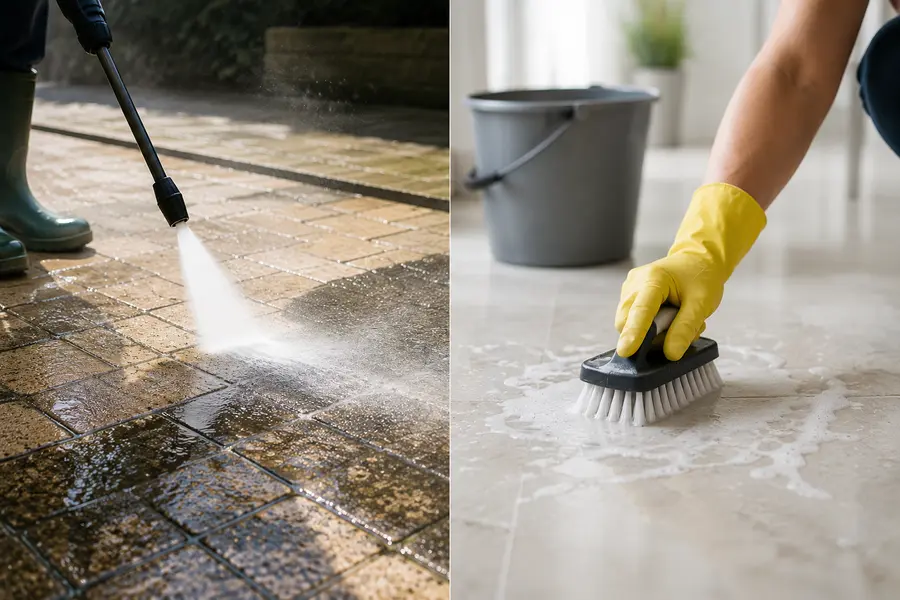
Maintaining your home’s cleanliness is more than just visual. Keeping your property clean is more than just a visual concern. Dirt, mould, stains, grease and grime can gradually eat away at surfaces and shorten the life of outdoor surfaces. Driveway, Patio, Wall, Deck, or Commercial Exterior – The best cleaning method always makes a difference. Some of the most popular methods to clean are traditional cleaning and hard cleaning. And although they do have a place, they are very different and work in very different ways, and produce very different results depending on the surface you are cleaning and what you are trying to achieve. Many Aussies are choosing pressure-based cleaning as a way to clean outdoor spaces, as it delivers fast results and a deeper clean. Does it mean that by doing this, you have to completely dismiss traditional cleaning?
Understanding Both Cleaning Methods
Traditional cleaning typically includes manual scrubbing, mopping, detergent usage, and the basic use of a scrub brush & water. The way it works is by breaking down a greasy and dirty surface so that the soil can be wiped off after water removal. However, High Pressure Cleaning is a water jetting at a very high pressure to clean surfaces, dust, algae, mould, stains, mud, and industrial residues. Instead of mostly relying on the manual strength of scrubbing, water pressure does most of the work. In fact, each cleaning method is beneficial to the kind of surface that is to be cleaned. In general, high-pressure washing is usually recommended as the best method for cleaning an outside area that has excessive dirt and grime present. Choosing the right cleaning method will result in better cleaning results and provide protection against unnecessary damage from the cleaning process.
How Pressure Cleaning Works
Pressure washers emit a fast-moving stream of water from the nozzle and produce such a water pressure that it is able to enter even the smallest pores of the material surface and disintegrate the dirt from inside, so the dirt can be washed out more rapidly than when pressing the material surface by hand. This is because this method helps to clean away layers of grime, mould, algae, grease and other stubborn contaminants that have been building up inside the pores, without a great deal of scrubbing. It also makes it possible to efficiently clean a large outdoor area, because of this saving not only time but also manual labour.
Common uses include:
- Driveways
- Concrete paths
- Brick walls
- Patios
- Outdoor entertainment areas
- Garage floors
- Commercial exteriors
Different high pressure cleaning tools may include:
- Pressure washer units
- Turbo nozzles
- Surface cleaners
- Extension wands
- Rotary attachments
- Hose systems
Selecting the right pressure is key to preventing surface damage.
Traditional Cleaning Still Matters
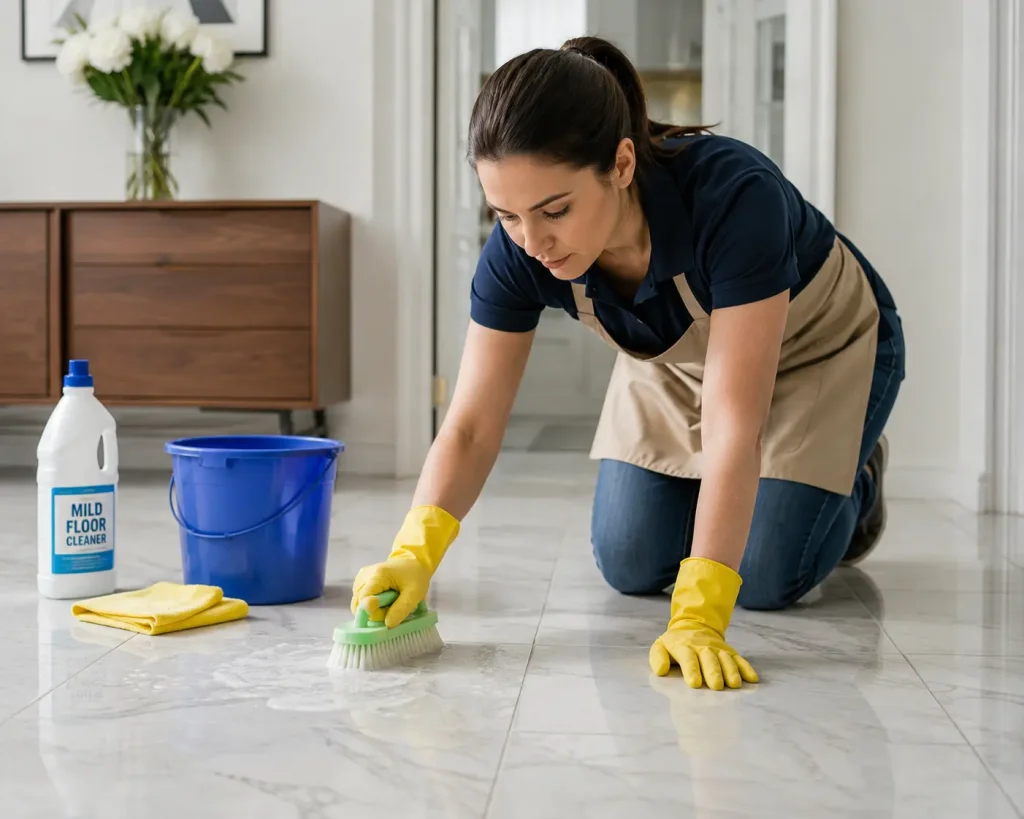
Conventional cleaning methods indeed remain effective; after all, not all surfaces can take the stress of a really high-pressure water jet. Indoor spaces, as well as finishes, are frequently more compatible with softer cleaning techniques.
Traditional cleaning may work best for:
- Glass interiors
- Timber furniture
- Painted indoor walls
- Upholstery
- Decorative finishes
Advantages include:
- Greater control
- Lower water force
- Suitable for delicate materials
- Reduced risk of surface wear
It’s true that manual cleaning is slower, but it gives you accuracy, which pressure cleaning may lack.
Comparing Cleaning Performance
When selecting methods, performance depends on your desired outcome. Are you maintaining appearance or removing deep soiling?
Cleaning Method Comparison
| Factor | High Pressure Cleaning | Traditional Cleaning |
| Cleaning speed | Fast | Moderate |
| Deep dirt removal | Excellent | Moderate |
| Physical effort | Low | Higher |
| Outdoor suitability | Excellent | Moderate |
| Delicate surfaces | Limited | Excellent |
| Water force | High | Low |
For external renovation and cosmetic enhancement, the results of High Pressure Cleaning are often more dramatic.
Where Each Method Works
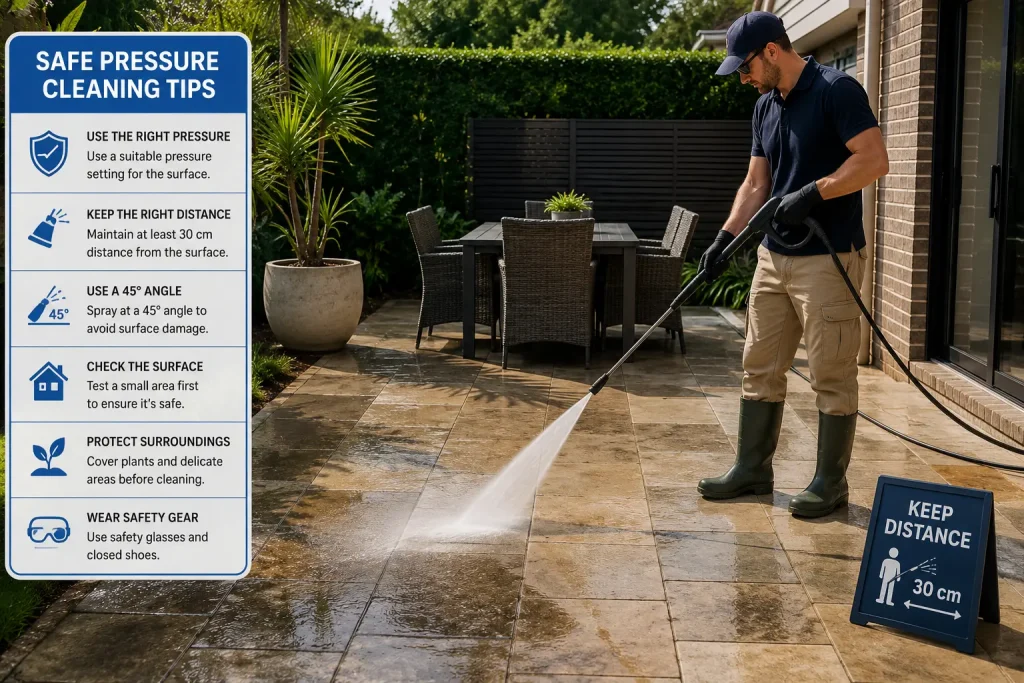
The proper technique depends on the type of surface
Best Areas For High Pressure Cleaning
- Concrete driveways
- Brick paths
- Retaining walls
- Outdoor tiles
- Exterior walls
- Commercial facades
Best Areas For Traditional Cleaning
- Indoor flooring
- Furniture
- Painted finishes
- Glass surfaces
- Delicate decorative areas
Applying the wrong pressure can result in a reduced lifetime for some materials. That’s why the choice of the right high pressure cleaning equipment is as important as the selection of the method itself.
Common Cleaning Mistakes
Much of your cleaning woes are due to bad technique, not bad tools. Stay away from these errors:
- Using Too Much Pressure
Excessive force can damage timber, paint, and grout.
- Skipping Surface Inspection
Different materials require different cleaning approaches.
- Ignoring Water Direction
Spraying upward may push moisture into surfaces.
- Using Wrong Attachments
Improper high pressure cleaning tools reduce efficiency.
- Delaying Maintenance
Heavy buildup requires more intensive cleaning later. Smart cleaning prevents unnecessary repairs.
Choosing The Right Equipment
Not all pressure cleaning systems perform the same.
Before selecting equipment, consider:
- Surface type
- Water pressure levels
- Attachment options
- Cleaning frequency
- Area size
Equipment Selection Checklist
| Consideration | Recommendation |
| Small patios | Compact pressure washer |
| Large driveways | Higher-capacity unit |
| Delicate surfaces | Adjustable pressure |
| Regular cleaning | Multi-purpose attachments |
| Commercial spaces | Professional-grade system |
Using the proper equipment improves results and reduces cleaning time.
Save Time And Long-Term Costs
People tend to look only at the clean-up costs on the day. Cleaning efficiency influences the cost of maintenance.
Pressure cleaning may:
- Reduce manual labour
- Restore appearance faster
- Delay surface replacement
- Improve outdoor presentation
Traditional cleaning may:
- Reduce equipment costs
- Offer better control
- Protect Sensitive Materials
For homeowners aiming to maintain cleaner outdoor areas with less effort over time, professional surface cleaning services can help improve long-term maintenance outcomes. The nature and frequency of cleaning should be determined by the kind of surface that is to be cleaned and how much financial resource one is willing to allocate towards the cleaning process.
How to Get the Best Cleaning Method?
The answer to this is not a single solution for every property, but generally, high-pressure cleaning is usually regarded as the best means of quickly and thoroughly cleaning exterior surfaces that are covered with dirt, mould, algae, or a build-up of stains. But for indoor cleaning, continuing cleaning with traditional methods plays a big part, mostly for delicate materials. Often the most successful method is to mix both ways of doing the job per the place being cleaned. Having the appropriate high-pressure cleaning equipment, being aware of surface needs, and sticking to regular cleaning days will allow Australian homeowners and businesses to save their properties and at the same time get better results in the long-term. Work smarter, not harder, and pick the method that is suitable for the work. For more property preparation and cleaning advice, read our tenant-friendly rent inspection cleaning checklist tips.