

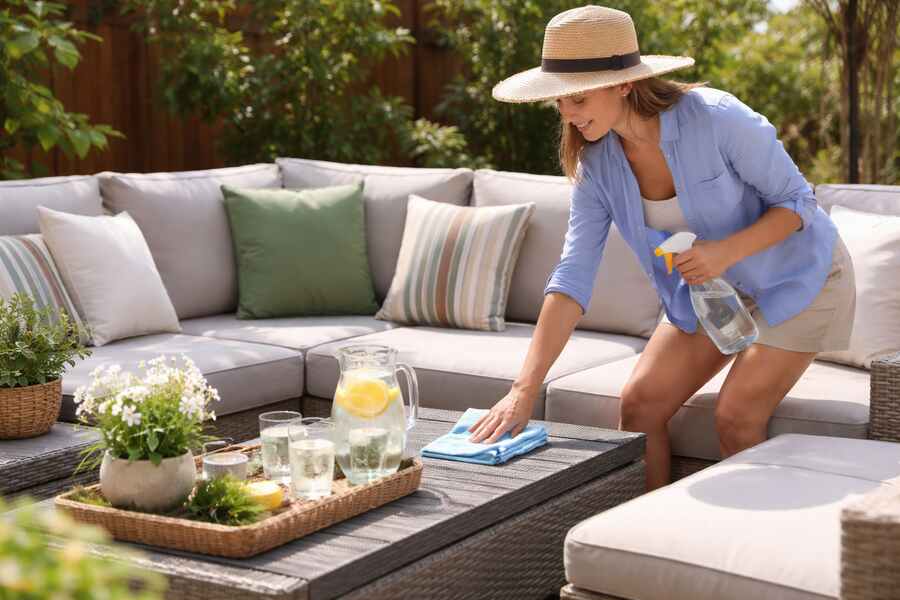
Did you ever sit outside in order to have a rest and find your furniture dusty, dirty, or filled with pollen? The furniture will be used outdoors to offer comfort and beauty to patios, balconies, and gardens, however when people move outdoors, they are in constant trouble with the sun, rain, wind, and the bird droppings, and of course everyday wear. All these are things which slowly spoil its beauty and make it perish with time without attending to it. But the best news of all is that it is possible to keep your outside furniture clean and appealing and cosy all year round with just a few simple cleaning habits and a regular maintenance schedule that will have your furniture looking good.
Our guide, as recommended by cleaning professionals, will speak about the ways to wash and maintain numerous pieces of furniture in practice to spend beautiful and clean outdoor areas without being under pressure and spending money on expensive purchases.
1. The Importance of Furniture Maintenance in the Outdoors
The conditions that outdoor furniture is exposed to are far more hostile since it is at all times subjected to the sunlight, rain, wind, dust and pollutants. The UV rays are able to take away colours, moisture rust or mildew and dirt can soak into furniture, making it appear pale and unattractive.
Constant cleaning is something which prevents long-term damage, ensures that hygiene is maintained and also makes your outdoor environment appear to be very friendly to family and guests. Even minor maintenance will help you avoid costly repairs and make sure your furniture will serve you longer and work better.
2. Before Cleaning, Find Your Furniture Material
You also to be informed about what your outdoor furniture is made of prior to commencing the cleaning, as required in detailed processes like bond cleaning Different materials do not have the same cleaning requirements, and the misuse of the cleaning technique may cause more damage than good. Such exterior furniture usually consists of wood, metal, plastic or resin, wicker or rattan and cloth fabrics such as cushions and upholstery.
They react in different ways to water, sunlight and cleaning chemicals and hence, with knowledge on the material, you can choose good and safe means of cleaning using that material.
3. Wooden Outdoor Furniture Care and Cleaning
The wooden outdoor furniture is very beautiful and natural but to maintain its beauty, it requires care of. It should begin by removing loose dust and leaves, wetting the surface with soft soap and warm water and scrubbing according to the direction of the wood. The timber should not be moistened but sprinkled a little water, and allowed to dry in the shade. It is important to treat it with wood oil or sealant once or twice annually to keep it dry or it will begin to wear away.
The wooden furniture will be covered during the heavy rains and cannot be put in wet ground. Slightly sanding a rough or stained surface can provide a polish to the surface and smooth it again.
4. Metal Outdoor Furniture Cleaning and Maintenance
When left unattended, metal furniture will rust or heat in the sun, however, it is well-built and attractive. Wipe the furniture made of metal with the help of the microfiber cloth, soap, water and run under a lot of water and ensure that the furniture is thoroughly dry before rust spots can be noticed.
To keep it, spray or coating of anti-rust or a protective coating of a wax layer, and ensure that any scratches are immediately touched up with similar paint before the rust can spread. Cushions also prevent scratches and help to minimise heat accumulation, and placing metal pieces in shaded areas helps them to avoid fading and overheating.
5. Washing and caring of Wicker or Rattan Furniture
Wicker and rattan furniture are beautiful in their texture, although dirt usually cuts deep into the weave and stains the outdoor areas. The cleaning process should start with mild cleaning with the help of the vacuum cleaner, so that the dust that is trapped can be wiped away with the use of a damp cloth and mild soapy water. Wicker must not be wetted excessively as the fibres are loosened and therefore they become loose.
To preserve it, then it is better to leave it in the shade or half-covered points in order not to be subjected to the sun and rain. Rattan of a natural type can still be coated in order to increase the lifespan, and cushions should never be stored in the same location, as this will cause uneven wear and form points of sagging.
6. Washing Exterior Cushions and Upholsteries
Outdoor cushions are comfortable, but are vulnerable to spills, sweat, dust and rain, hence they need frequent maintenance. In case they have removable covers, clean them as per the labels. In the case of cushions which cannot be removed, wash them with a soft detergent mixed with water and clean them with a soft brush. Never leave cushions to dry in stale air because this will cause the development of molds and mildew.
To maintain long-term, the store cushions should be kept indoors when there is rain or during winter, it should be covered with a waterproof cover, and dust should be shaken off every now and then. Do not store wet cushions; wet cushions are their biggest enemy.
Conclusion
Outdoor furniture is not just a seat, this is where you take time and have tea, have a chat, read and have a rest after a working day. A few minutes of expert cleaning and maintaining it make such moments comfy and friendly. Although your furniture can be dusty or in need of an upgrade now, with some cleaning, gentle products and careful coverage, it can come out beautiful again. Through easy routine maintenance, your outdoor furniture will always be appealing, solid and prepared to relax in the seasons. Regular attention also helps tackle stubborn stains before they settle permanently.